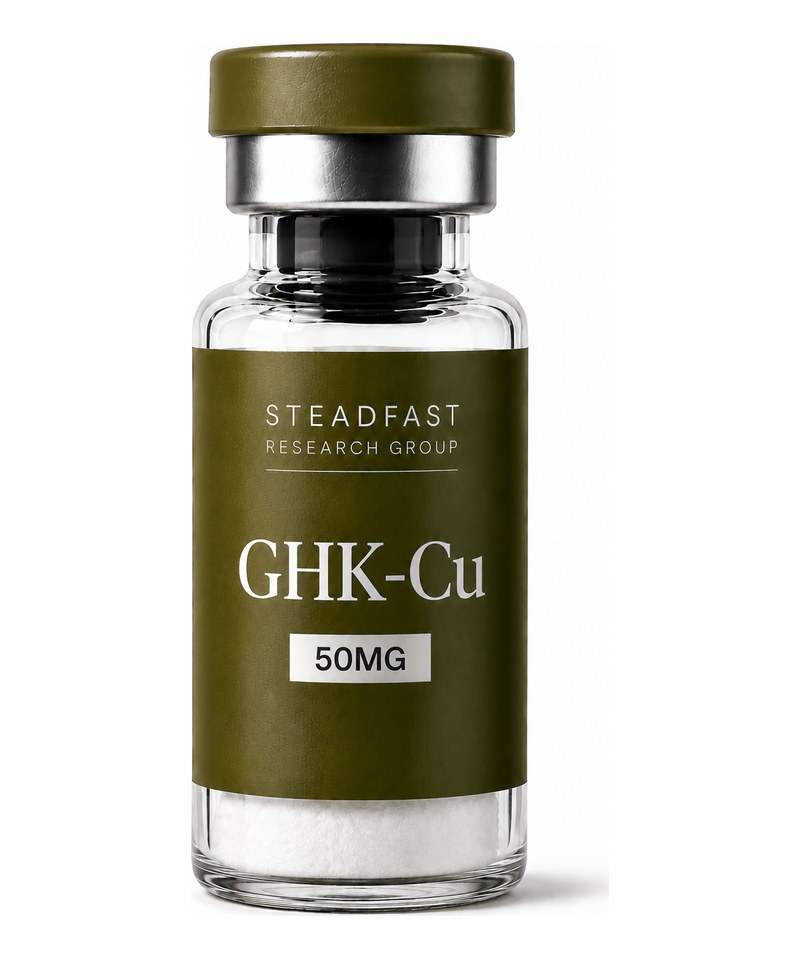
AminoGHK
A naturally occurring copper-binding tripeptide (Gly-His-Lys : Cu2+), studied in preclinical tissue-remodeling and skin research.
Customers also frequently order with
What research has studied about GHK-Cu
GHK-Cu is a copper-binding tripeptide made of glycine, histidine, and lysine complexed with a copper(II) ion. It occurs naturally in the body and its levels decline with age; in research it is studied for roles in tissue remodeling, matrix signalling, and cellular communication.
Laboratory research on GHK-Cu has examined effects on collagen and matrix-protein expression, antioxidant signalling, and wound-repair models in cell and animal systems, going back to the tripeptide's isolation from human plasma in 1973 — our research blog walks through what published GHK-Cu research has actually reported, study by study. These are preclinical observations reported in the literature; nothing here describes use in humans.
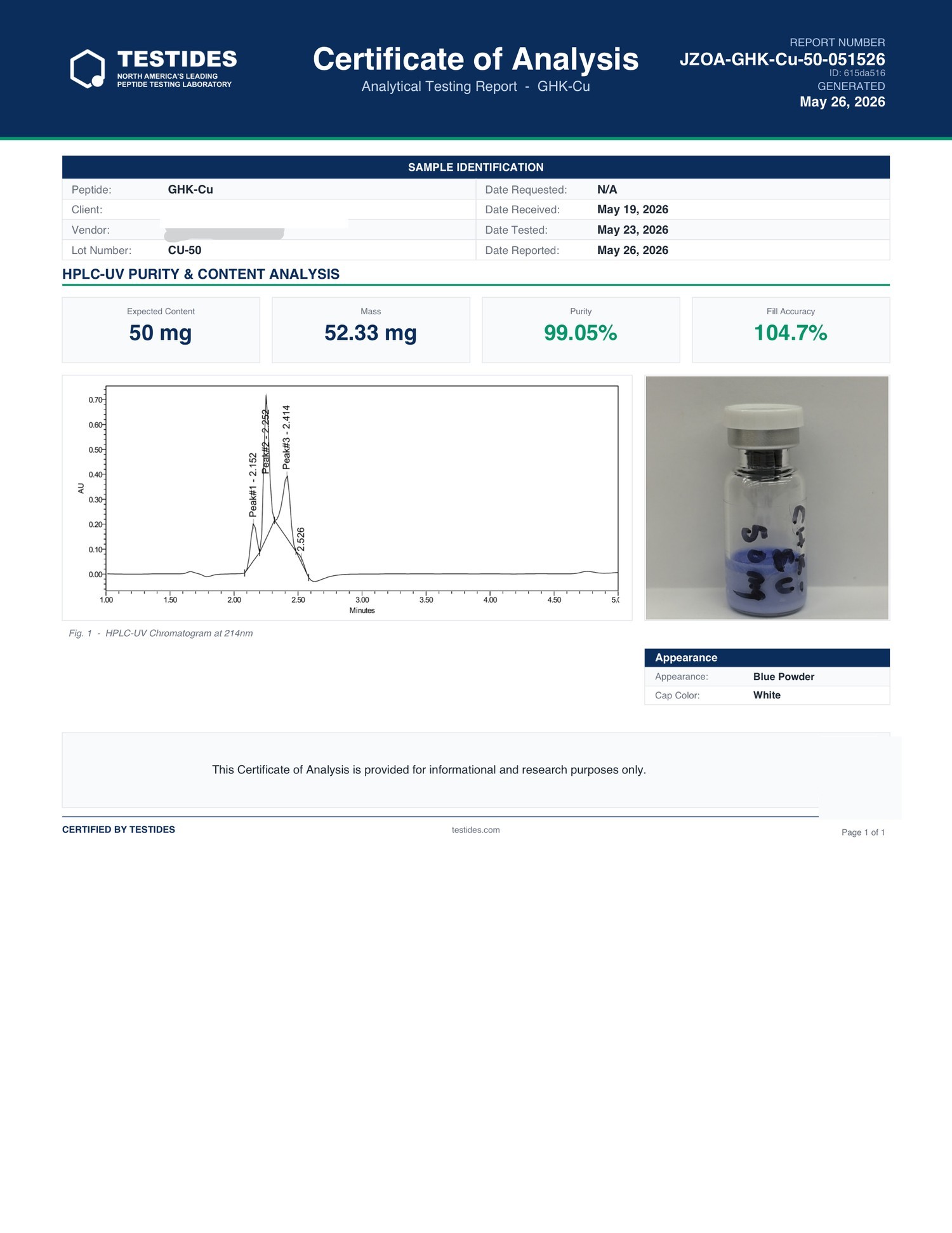
Certificate of Analysis
A representative third-party certificate for GHK-Cu. Every batch ships with a lot-matched COA; contact us for the certificate on any other lot.
Specifications
| Compound | GHK-Cu |
| Available sizes | 50 mg |
| Form | Lyophilized powder |
| Purity | Measured by HPLC; see the Certificate of Analysis for the lot |
| Storage | Store cold and away from light per your lab protocol |
| Intended use | Laboratory and research use only |
Research sources
- Pickart L, Margolina A, "Regenerative and Protective Actions of the GHK-Cu Peptide," Int. J. Mol. Sci. 19(7):1987 (2018). PMID 29986520
- Pickart L, et al., "GHK Peptide as a Natural Modulator of Multiple Cellular Pathways in Skin Regeneration," BioMed Research International 2015:648108 (2015). PMID 26236730
Frequently asked questions
What is GHK-Cu?
GHK-Cu is a naturally occurring copper-binding tripeptide (Gly-His-Lys plus copper) studied in preclinical tissue-remodeling research. Steadfast supplies it as a lyophilized research material for laboratory use only.
What has research studied about GHK-Cu?
Research has examined its effects on collagen/matrix signalling, antioxidant pathways, and wound-repair models in laboratory and animal systems.
Is it intended for human use?
No. It is a research chemical for in-vitro laboratory research only, not a drug or supplement.